

Rosemary, memory and neuroscience: between classical tradition and
modern evidence
From cultural symbol to object of scientific study
From cultural symbol to object of scientific study
May 5, 2026, Editorial.
Modern interest
in rosemary as a cognitive modulator stems primarily from neuroscience and psychopharmacology research
analyzing the effects of essential oils on cognitive functions. One of the most studied compounds is
1,8-cineole (eucalyptol), a volatile molecule that can be inhaled and detected in the bloodstream after
aromatic exposure. A widely cited study, published by researchers at Northumbria University, found that
participants exposed to the aroma of rosemary showed improvements in prospective memory tasks. This same
study detected a correlation between blood concentrations of 1,8-cineole and cognitive performance, suggesting
a real physiological mechanism. However, it is crucial to clarify: the observed increases do not represent
a generalized “75%” improvement. The effects, while statistically significant, are moderate and dependent
on the experimental context, including aroma concentration, task type, and individual variability.
How does rosemary affect the brain?
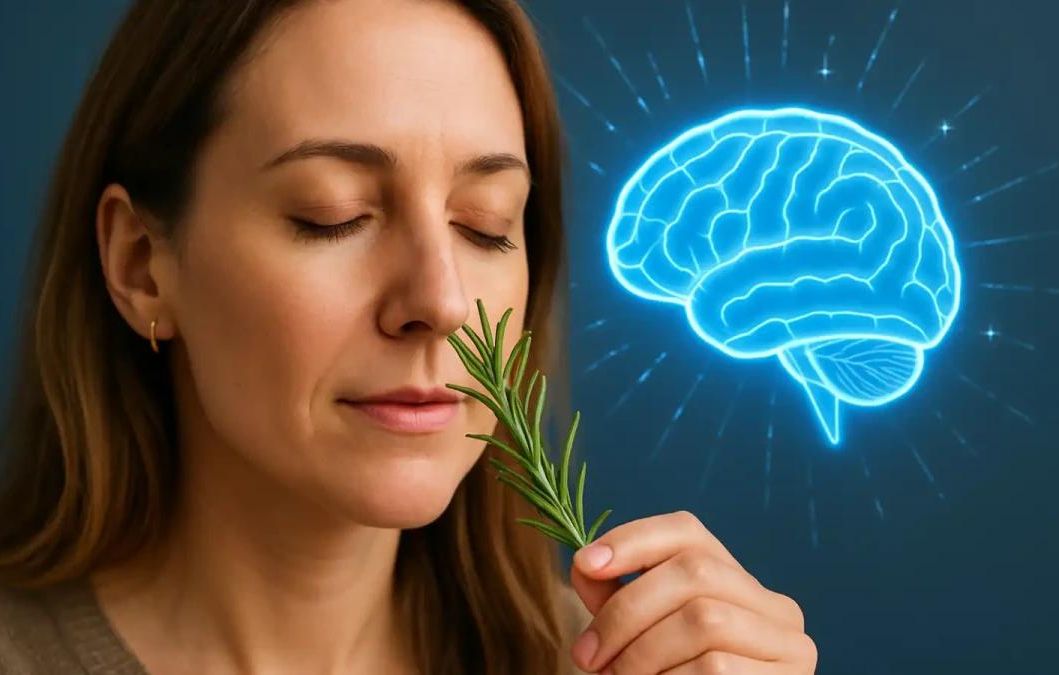 From a neurochemical
perspective, interest in rosemary focuses on its potential interaction with the cholinergic system. Acetylcholine
is a key neurotransmitter in attention, learning, and memory processes. Some studies suggest that certain
compounds in rosemary may partially inhibit the enzyme acetylcholinesterase, responsible for breaking
down acetylcholine, thereby increasing its synaptic availability. This mechanism is relevant because
drugs used in diseases such as Alzheimer's (for example, donepezil) act precisely on this pathway. However,
in the case of rosemary, the effect is much milder and not comparable to pharmacological interventions.
From a neurochemical
perspective, interest in rosemary focuses on its potential interaction with the cholinergic system. Acetylcholine
is a key neurotransmitter in attention, learning, and memory processes. Some studies suggest that certain
compounds in rosemary may partially inhibit the enzyme acetylcholinesterase, responsible for breaking
down acetylcholine, thereby increasing its synaptic availability. This mechanism is relevant because
drugs used in diseases such as Alzheimer's (for example, donepezil) act precisely on this pathway. However,
in the case of rosemary, the effect is much milder and not comparable to pharmacological interventions.Additionally, 1,8-cineole and other terpenes could influence:
- neuronal excitability
- modulation of GABA receptors
- brain inflammatory response
- alertness
The concept of “bio-hacking” and its modern reinterpretation
The term “biohacking” applied to the use of rosemary is, strictly speaking, a contemporary
reinterpretation. In the current context, it refers to non-invasive interventions aimed at optimizing
biological functions. Under this broad definition, aromatherapy could be considered a basic form of sensory
modulation. However, equating ancient practices with deliberate cognitive engineering can be misleading.
Classical cultures operated within symbolic and empirical frameworks, not neuroscientific models. The
interesting thing is not that the Greeks “knew” how it worked, but that their tradition partially coincides
with modern scientific findings, which opens up avenues of interdisciplinary research between ethnobotany
and neuroscience.
Clinical evidence and limitations
Although initial studies are promising, the use of rosemary as a cognitive enhancer
has clear limitations. Most trials: have small sample sizes, are conducted under controlled laboratory
conditions, measure short-term effects, and show significant variability between individuals. Furthermore,
factors such as participant expectations (placebo effect), familiarity with the aroma, or prior emotional
state can influence the results. To date, there is insufficient evidence to recommend rosemary as a clinical
tool for improving memory in the general population or in patients with cognitive impairment.
Potential applications in technology and medicine
Despite
these limitations, interest in aromatic compounds like rosemary is growing in the fields of cognitive
technology and neuroergonomics. Some lines of development include: optimized work environments using
olfactory stimuli, multisensory interfaces in virtual reality, cognitive support in education through
environmental modulation, and research into complementary therapies for cognitive aging. In this sense,
rosemary could form part of a broader ecosystem of non-invasive interventions aimed at improving mental
performance.
Can scent cross the blood-brain barrier?
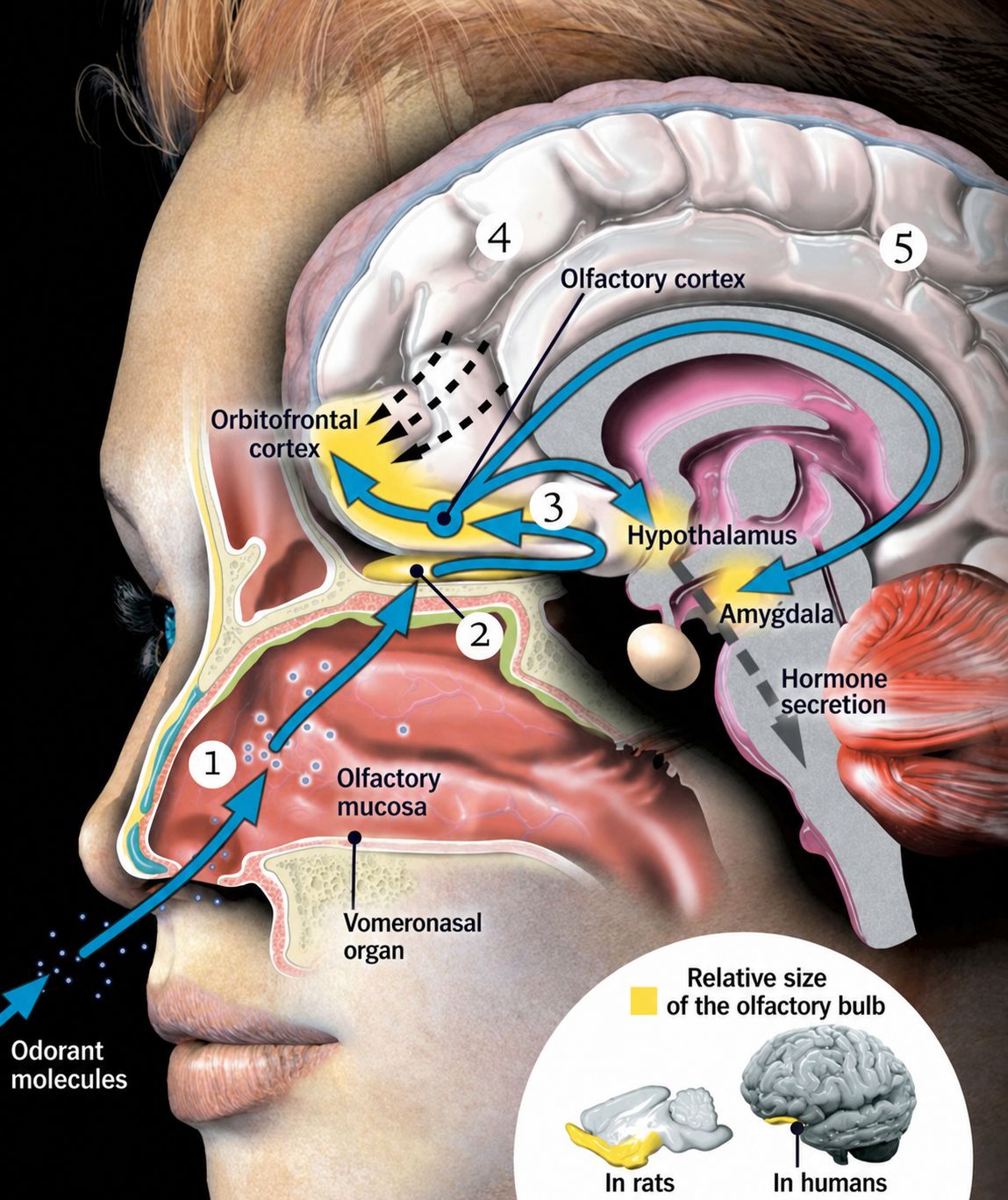 One
of the most striking claims is that 1,8-cineole can cross the blood-brain barrier.
One
of the most striking claims is that 1,8-cineole can cross the blood-brain barrier.Evidence suggests that, after inhalation, small amounts of volatile compounds can enter systemic circulation and potentially reach the brain.
However, this process does not necessarily imply a strong or immediate direct effect. It is also important to consider the olfactory pathway: the olfactory system has direct connections to the limbic system, allowing odors to influence emotions and memory without requiring high systemic concentrations.
Conclusion
The
idea that rosemary can improve memory has a real, but limited, scientific basis. It's not a "cognitive
software patch" or an instant brain upgrade, but it is an interesting example of how natural compounds
can subtly influence cognitive functions, given that the aroma of rosemary contains compounds like 1,8-cineole
which, under controlled conditions, can be associated with modest improvements in certain cognitive functions,
particularly prospective memory. The claim that students in Ancient Greece used rosemary as a form of
"cognitive biohacking" contains a plausible historical kernel, but also a significant dose of modern
reinterpretation. Rosemary (Rosmarinus officinalis, now classified as Salvia rosmarinus) has been symbolically
associated with memory since Greco-Roman antiquity. Writings by authors such as Pliny the Elder and later
traditions in Europe document its use in rituals, education, and cultural practices linked to remembering.
However, the idea that there was a technical understanding of its neurochemical impact is a contemporary
extrapolation. What is truly remarkable is that modern science has begun to find correlations between
this traditional use and measurable effects on the human brain.
More than a miracle cure, rosemary represents a point of convergence between tradition, biology, and emerging sensory technology.
More than a miracle cure, rosemary represents a point of convergence between tradition, biology, and emerging sensory technology.
References
- Moss M. et al. Aromas of rosemary and lavender essential oils differentially affect cognition and mood. Northumbria University.
- Pengelly A. et al. Short-term study on the effects of rosemary on cognitive function.
- Perry E. et al. Medicinal plants and Alzheimer's disease.
- European Journal of Neuroscience – studies on cholinergic modulation.
Rome wasn't built in a day


