
A new frontier in urology: robots the size of a grain of rice
May 5, 2026, Editorial.
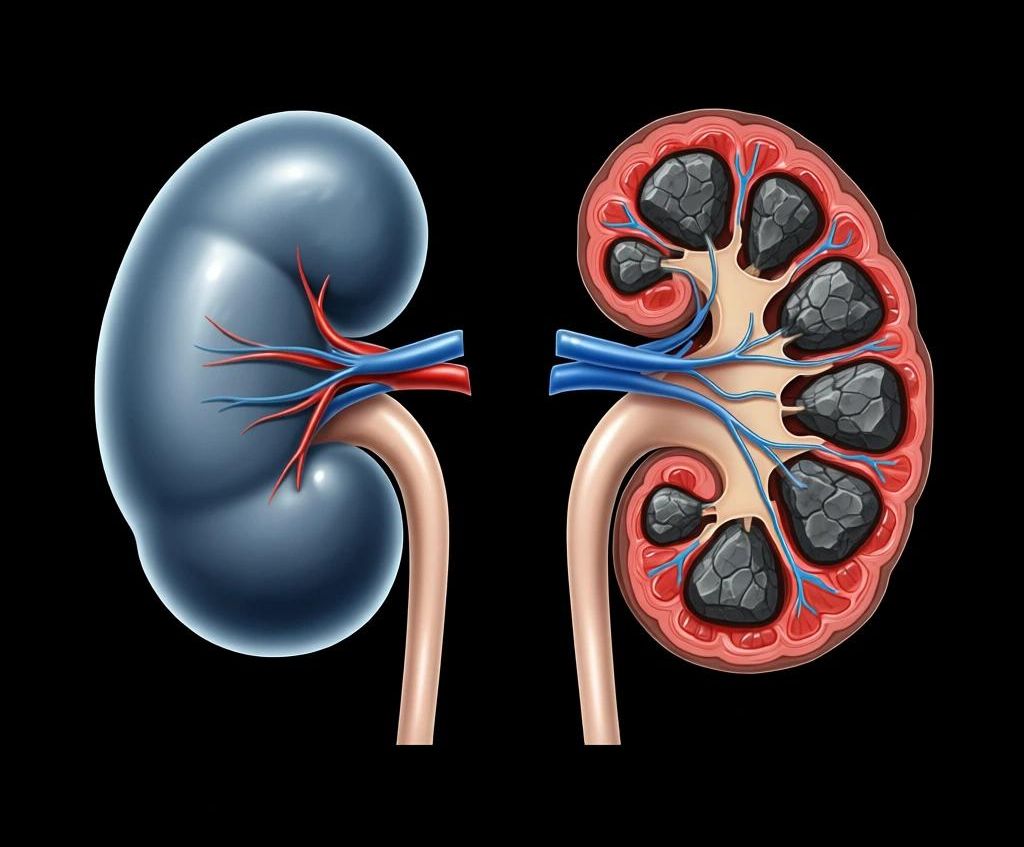
Kidney stones
affect millions of people, and while treatments like extracorporeal shock wave lithotripsy or ureteroscopy
are effective, they have limitations: incomplete access to complex cavities, imperfect fragmentation,
and recurrence.
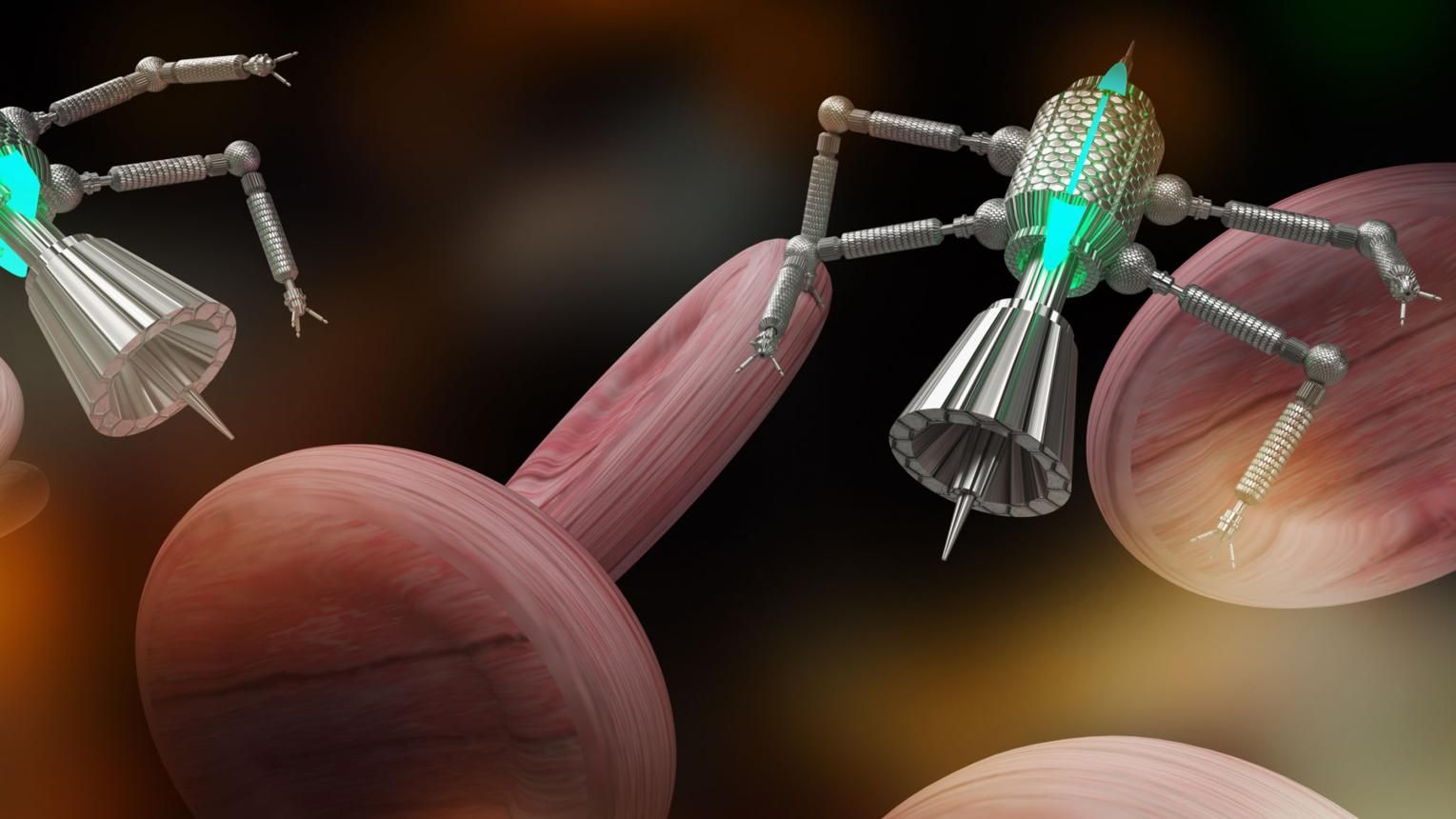
In this context, a technologically elegant proposal emerges: microrobots guided by external magnetic fields capable of navigating the urinary system, reaching the stone, and fragmenting it locally. The concept integrates three disciplines: materials engineering, electromagnetic control, and minimally invasive urology.
In Canada, teams associated with the University of Toronto have developed prototypes of soft or hybrid (soft-rigid) robots with biocompatible coatings and ferromagnetic elements that respond to dynamic magnetic fields. Although the exact size varies by design, some prototypes are approximately millimeters in size (comparable to a grain of rice), which would allow passage through the ureter and renal cavities.
In this context, a technologically elegant proposal emerges: microrobots guided by external magnetic fields capable of navigating the urinary system, reaching the stone, and fragmenting it locally. The concept integrates three disciplines: materials engineering, electromagnetic control, and minimally invasive urology.
In Canada, teams associated with the University of Toronto have developed prototypes of soft or hybrid (soft-rigid) robots with biocompatible coatings and ferromagnetic elements that respond to dynamic magnetic fields. Although the exact size varies by design, some prototypes are approximately millimeters in size (comparable to a grain of rice), which would allow passage through the ureter and renal cavities.
How does magnetic navigation work in
the body?
The physical principle is well known: magnetic field
gradients generate forces and torques on magnetized materials. Using arrays of coils or external magnets
(Helmholtz-type systems or robotic platforms), the following are controlled:
- Translation: the robot moves forward following the gradient.
- Orientation: the torque aligns the device to "point" towards complex trajectories.
- Mechanical interaction: vibration, rotation, or micro-impacts to act on the target.
Fragmentation of calculations: from concept to applied physics
The clinical goal is to reduce the stone to submillimeter fragments that the body
can expel naturally. To achieve this, microrobots explore several strategies:
- Mechanical micropercussion: vibration or rotation of an active head that generates microfractures on the stone's surface.
- Controlled abrasion: sustained contact that “wears away” the material (calcium oxalate, phosphate, uric acid).
- Coupling with external energy: enhancing the effect with focused ultrasound or directed microwaves.
Potential advantages over current techniques
Without making excessive promises, the approach offers clear theoretical advantages:
- Access to complex anatomies: narrow or tortuous renal calyces where rigid instruments fail.
- Less invasiveness: no incisions; potential reduction in pain and infections.
- Localized energy: less impact on the surrounding renal parenchyma.
- Personalized procedures: trajectory and strategy adapted to each patient.
However, these advantages must be demonstrated in comparative clinical trials against current standards.
- Access to complex anatomies: narrow or tortuous renal calyces where rigid instruments fail.
- Less invasiveness: no incisions; potential reduction in pain and infections.
- Localized energy: less impact on the surrounding renal parenchyma.
- Personalized procedures: trajectory and strategy adapted to each patient.
However, these advantages must be demonstrated in comparative clinical trials against current standards.
Device
engineering: materials, biocompatibility, and safety
 A critical challenge is the robot's
design. It must be:
A critical challenge is the robot's
design. It must be: - Biocompatible (medical-grade polymers, non-stick coatings).
- Resistant to varying urinary environments (pH, crystals, biofilm).
- Precisely controllable without interference.
- Recoverable or biodegradable to prevent retention.
Relevant scientific evidence
Although the direct application of magnetic microrobots for kidney stone fragmentation
is still in a preclinical consolidation phase, the field rests on a solid scientific foundation developed
over more than a decade. Researchers such as Bradley J. Nelson have consistently demonstrated the feasibility
of magnetic microrobots capable of navigating with high precision within complex biological environments,
particularly in endovascular contexts where millimeter-level control is critical. In parallel, the work
of Metin Sitti has expanded the paradigm to include bio-inspired systems and soft structures capable
of moving through biological fluids with a degree of adaptability that reduces the risk of tissue damage.
These advances are not isolated. Publications in high-impact journals such as Science Robotics, Nature
Communications, and Advanced Materials have rigorously documented the remote control of microrobots using
magnetic fields, as well as their ability to perform tasks such as targeted drug delivery, microstructure
manipulation, and navigation in dynamic physiological media. Taken together, these results establish
not only the physical feasibility of the approach, but also its potential for transfer to clinical applications
in urology, where precision and access to complex cavities are crucial.
Integration
with medical imaging and artificial intelligence
One of the
most critical elements for the clinical implementation of these systems is the ability to navigate safely
in real time. This requires the integration of medical imaging technologies that allow the microrobot
to be located and tracked within the body. In practice, different modalities are being explored, each
with its own advantages and limitations. Fluoroscopy offers high spatial resolution but involves exposure
to ionizing radiation; ultrasound, on the other hand, provides a portable and radiation-free alternative,
although with lower resolution in certain contexts; while magnetic resonance imaging (MRI) stands out
for its excellent tissue contrast, although it introduces significant restrictions on the use of magnetic
materials. Overlaid on this imaging infrastructure is an increasingly sophisticated layer of computational
control. Current systems integrate trajectory planning algorithms capable of anticipating and correcting
deviations caused by physiological factors such as urinary flow or respiratory movements. In this context,
artificial intelligence is beginning to play a relevant role, optimizing routes and adjusting parameters
in real time. From a clinical perspective, this translates into a hybrid model in which the surgeon maintains
strategic oversight of the procedure, while the system executes automatic micro-adjustments with a precision
difficult to achieve manually.
Clinical and regulatory obstacles
Despite the technological potential, the transition to clinical practice involves
overcoming a series of complex challenges that cannot be underestimated. First, safety validation is
fundamental: any device navigating within the urinary system must demonstrate that it does not cause
mucosal injury, obstruction, or become lodged in the body. This is especially critical given the small
scale of microrobots and the potential difficulty of retrieval. Furthermore, it will be necessary to
establish standardized clinical protocols that precisely define variables such as patient positioning,
the intensity and configuration of magnetic fields, as well as the duration and sequence of the procedure.
Compatibility with imaging systems also presents a technical challenge, as interference must be minimized
and, in the case of radiation-based techniques, cumulative exposure for both the patient and the medical
team must be reduced. From a regulatory perspective, these devices will have to undergo the complete
clinical validation process, including phase I, II, and III trials, before obtaining approval from agencies
such as the FDA, Health Canada, or the European Medicines Agency. Added to this is the economic evaluation,
where factors such as the cost of implementation, equipment maintenance and the learning curve of medical
personnel will play a decisive role in its adoption.
Beyond
kidney stones: a platform for precision medicine
If these systems
achieve clinical maturity, their impact could extend far beyond the treatment of kidney stones. The ability
to guide microscale devices within the human body opens up a range of applications in precision medicine.
For example, it would be possible to deliver targeted therapies to tumors through the localized release
of drugs or the application of controlled hyperthermia, increasing efficacy and reducing systemic side
effects. Similarly, in the vascular field, these devices could be used to remove microthrombi in hard-to-reach
areas, offering an alternative to more invasive procedures. Another promising area is focal biopsy, where
microrobots could obtain tissue samples with unprecedented precision, even from small or complexly located
lesions. Taken together, these applications position microrobotics as a key technological driver in the
evolution toward highly personalized, minimally invasive interventions, characterized by extremely precise
spatial control and deep integration between engineering and clinical medicine.
Conclusion
There is still no universally
approved standard urine test for routinely screening for pancreatic or prostate cancer, but there are
robust lines of research, clinical trials, and peer-reviewed studies showing promising results. In particular,
the detection of urinary biomarkers has become one of the most active areas of precision diagnostic medicine.
The narrative of “robots that remove kidney stones without surgery” is a plausible projection supported
by real advances in magnetic microrobotics. However, it is not yet a clinical standard. The field is
advancing rapidly, and if its safety and efficacy are confirmed, it could redefine interventional urology,
reducing trauma and improving outcomes in complex scenarios.
References
- Nelson BJ, Kaliakatsos IK, Abbott JJ. Microrobots for minimally invasive medicine. Annual Review of Biomedical Engineering.
- Sitti M et al. Biomedical applications of untethered mobile milli/microrobots. Nature Reviews Materials.
- Peyer KE, Zhang L, Nelson BJ. Bio-inspired magnetic swimming microrobots for biomedical applications. Nanoscale.
- Kim S, Nelson BJ. Soft microrobotics for biomedical applications. Advanced Materials.
- Martel S. Magnetic navigation of microdevices in the human body. Wiley Interdisciplinary Reviews.
Be the change you wish to see